9:4 - Two Writers, Infinite Butterflies | Interview with Amina Mobley
What can collaboration look like between two fiction writers? How do generosity and vulnerability shape artistic relationships?
I used to think that “serious” writing involved retreating somewhere alone in a self-imposed vacuum. Part of me romanticised the image of a solitary writer holed up in a room with a desk by a window, tuning out the world to map inner worlds. But the more I create, the more I realise that it's also deeply relational: our work responds to conversations, emotions, artistic references that move through us.
Absorbing inspiration, then transmuting it into artistic expression – it's usually one way. I rarely encounter works that are actively and directly in conversation while they're in progress. When I learned that my friend and writer, Amina Mobley, wrote a fictional piece in response to her friend's story – which was inspired by a conversation about a shared experience – I was intrigued by the layered and intertwined nature of their work. It sounded like artistic play, but the kind that's only possible with a foundation of trust. I wanted to hear more.
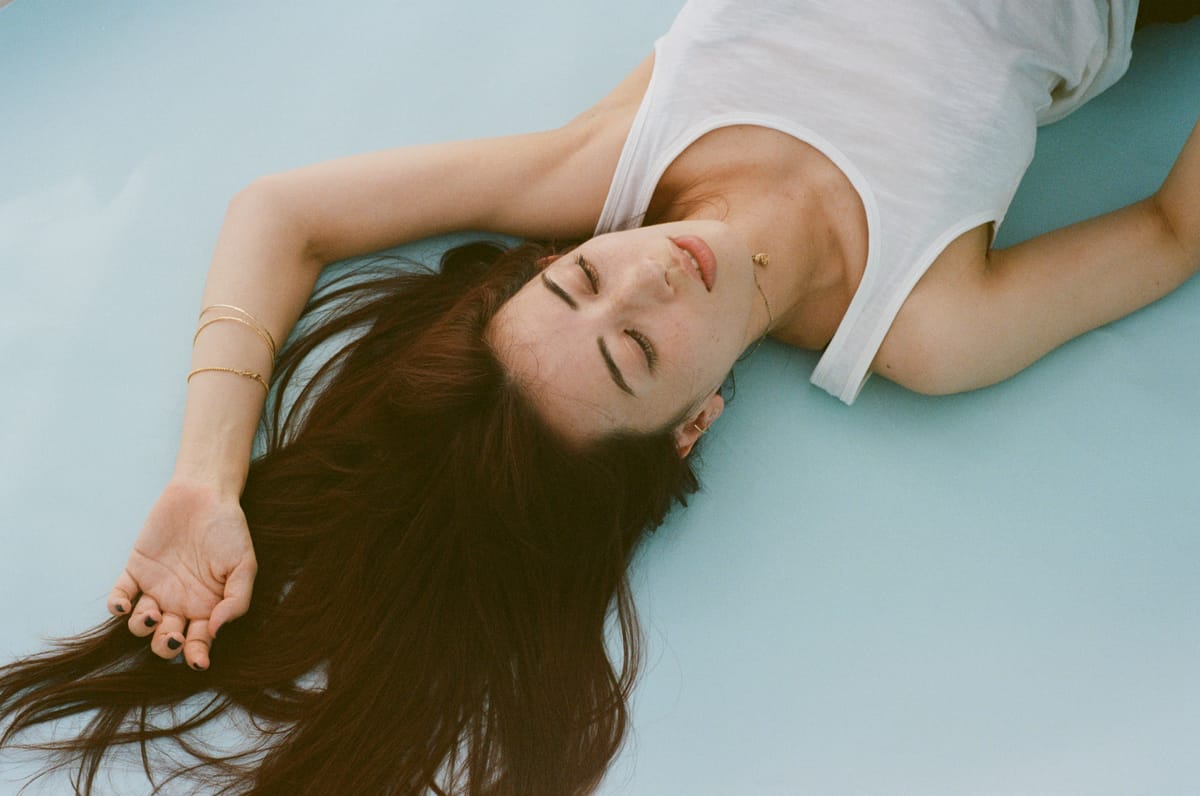
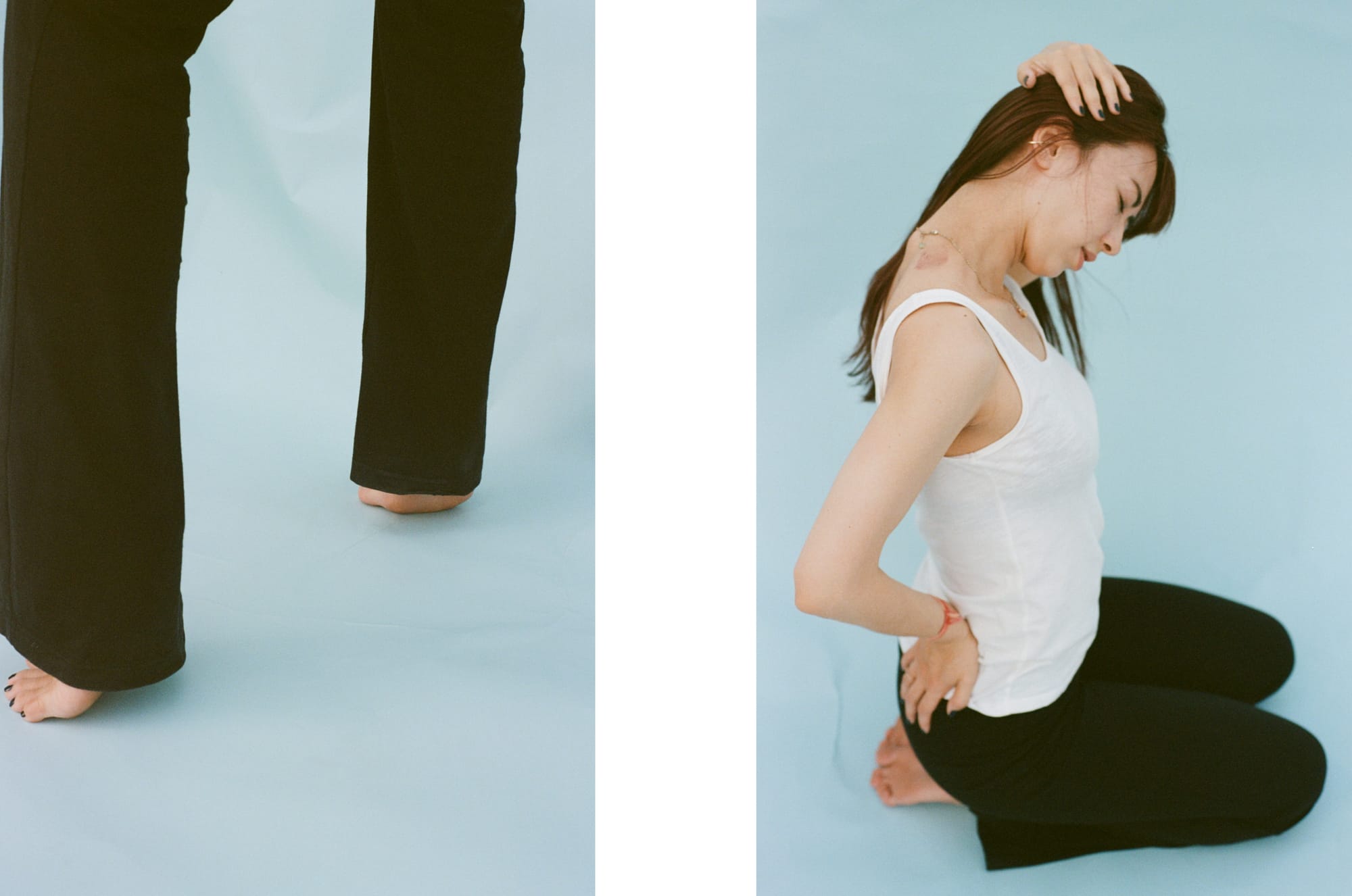
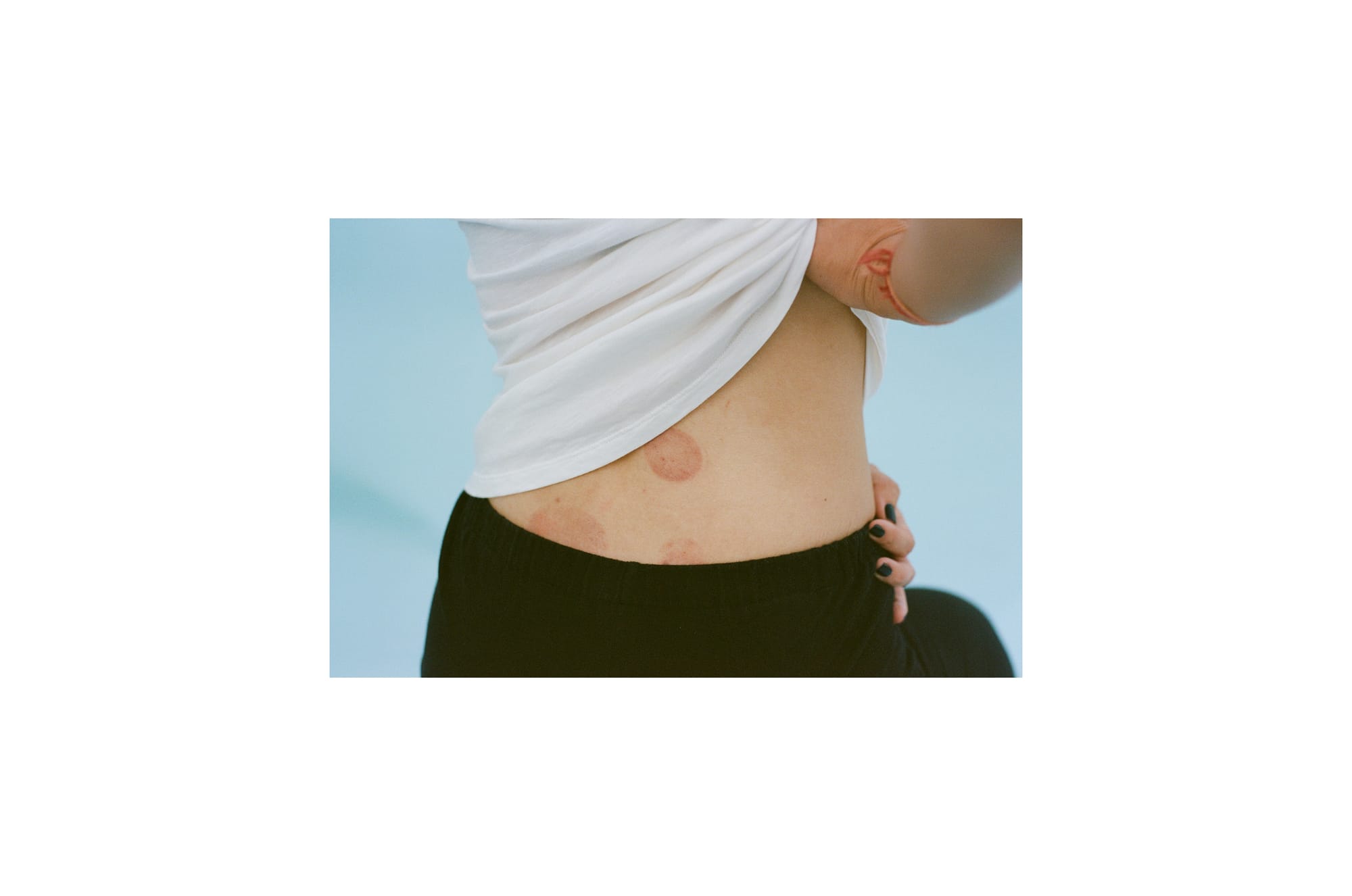
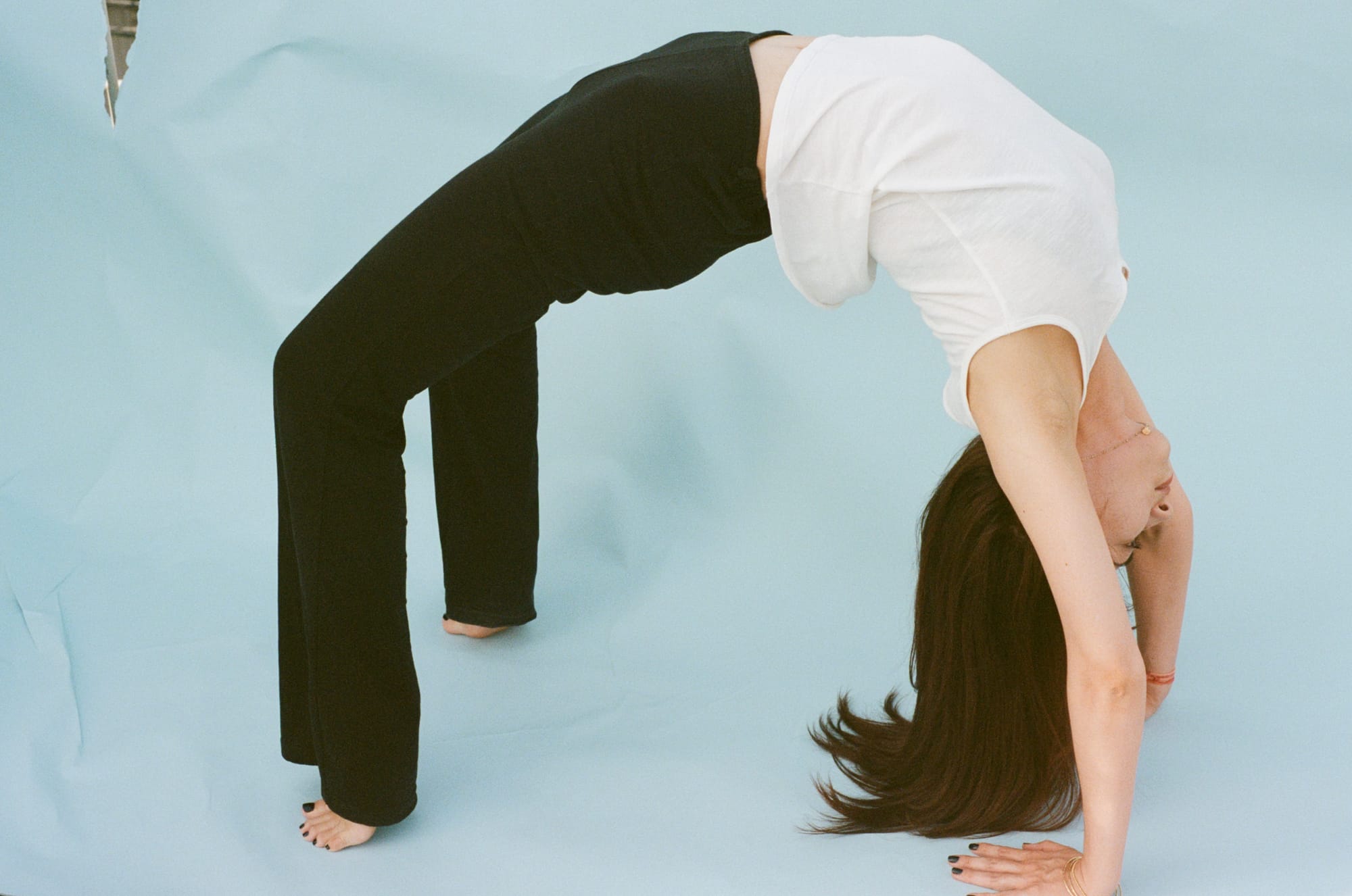
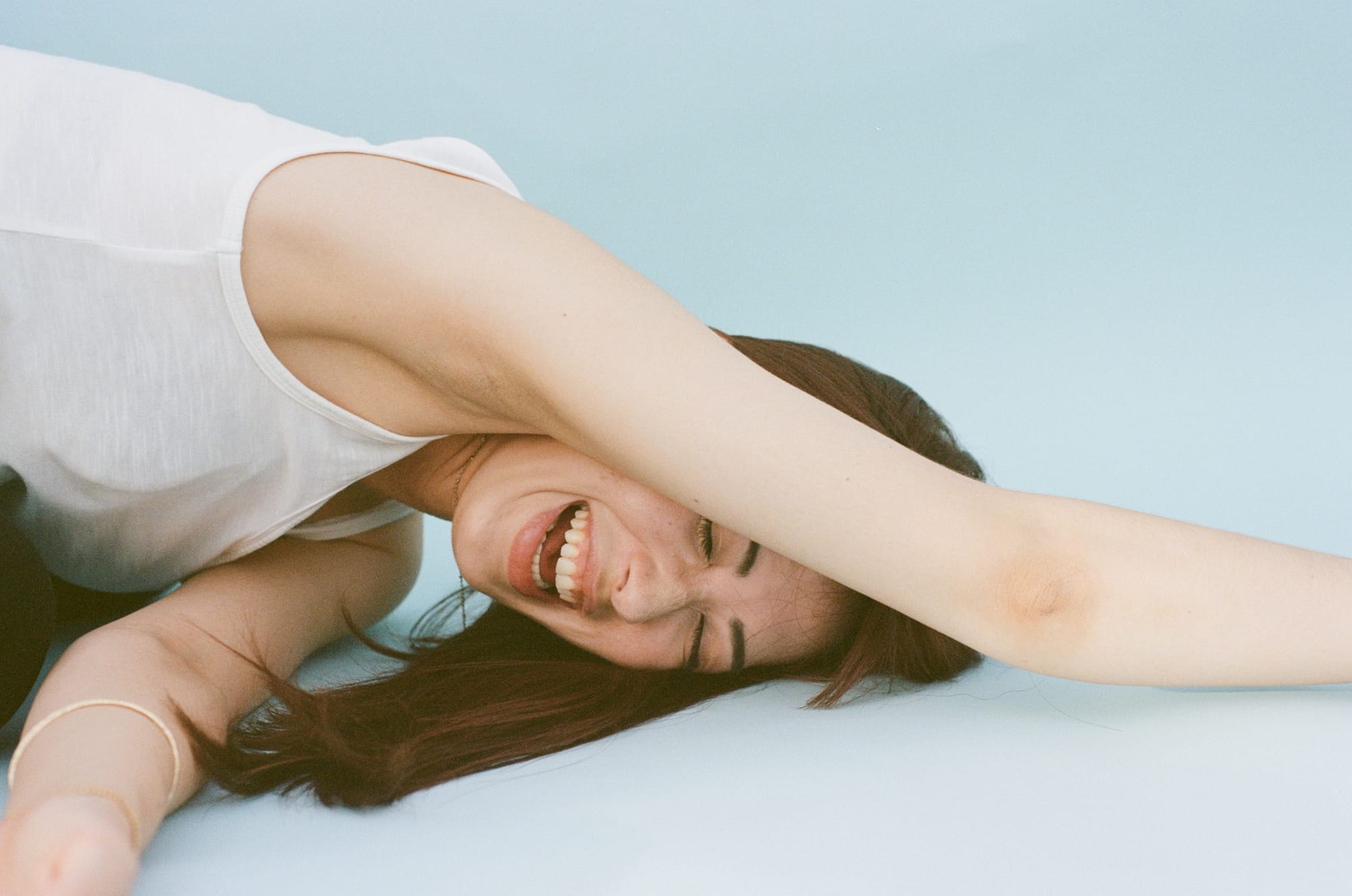
In the spirit of Amina's piece and our friendship, rooted partly in a shared yoga practice, I created photographs that explore physicality and vulnerability to accompany the conversation below.
How did your piece come about?
I have a good friend from grad school who I consider my artistic colleague. Every week, we picked a short story to read together and discussed it online so we built this working relationship first, then when we met in person we had a lot in common. It's a rare and intimate relationship.
Recently, she asked respectfully if she could write a story [inspired by a shared experience we had] with a fictionalized version of me in it. As a fellow writer, I was honoured. I said, just go for it and if I don't feel at least a little bit prickly in your depiction of me, then I’m going to feel that you’re holding yourself back and I’ll be offended.
It’s special to be seen in that way and have friendships that speak to your artistic self.
You can present to the world parts of you that you want to be seen. But having somebody who can see beyond that, who you feel comfortable with showing your vulnerabilities, is what her piece is about. Everyone has a story about themselves. Do you let others see more of you?
How was the experience of reading a fictionalised part of you in your friend's piece?
She put into words things that I couldn't express on my own — things that were difficult for me to talk about. I was really touched.
It's a short story and the form itself doesn't easily allow for multiple points of view, so she had to pick one thing to say and she went all the way. When two people share an experience, each side is going to be slanted. I could see the slanting, so I thought, what if I fill in the other side? I wanted to write a response to her piece.
Then I started getting really scared. As a writer, it's our job to feel all of the feelings that a non-writer doesn’t have the capacity to or isn’t brave enough to, and write that down then share it. I am trying to sit with uncomfortable feelings for a long time, but I think our inclination is to run away. Only in designated periods are we allowed to fully feel and express ourselves, like if we go to a comedy show or watch a really sad movie.
I love that idea of the role of the writer as someone who sits with feelings and explores the visceral realm of feelings in your body.
What can you share about your piece that you're writing as a response?
In my story, a woman is going through a separation and also a process of self discovery. It’s about control, desire, and the inevitability of change.
Because of these changes, she's really hungry so she goes to this sushi restaurant, where she has a conversation with the sushi master, which is prompting her to remember the past.
The last time she was there was a year ago. She was married and she went with her fictional friend who is in [the grad school friend’s story]. Since then everything changed for this character, including recently finding out a big secret from her friend.
It’s interesting how you’re taking the same character from your friend’s piece, but placing her in a completely different setting through the sushi restaurant, and incorporating other themes that have been on your mind. Was there ever a concern about sharing the same character or inspiration?
The author of ‘Prophet song,’ Paul Lynch, said that writing is like catching butterflies. You always have to have your net out and be looking for them because they're everywhere. With my friend’s piece and mine, we both happened to find one butterfly at the same time. At the time, I told her she could have it, because I wasn't interested in writing about the topic.
Then when she created her piece, I got really inspired by it. We're never writing about the butterfly itself, right? She ended up writing about something totally different – about friendship.
We have this scarcity mindset sometimes. Even if you share the same subject, it's going to take on a completely different shape. I think it’s natural to feel protective, but so much of what we make is an amalgamation of conversations and other artists’ work that we’ve come across. It’s special to be in direct conversation with someone who inspired a piece.
If I just caught that butterfly myself, maybe I would have written something, maybe not. Even if I did, it would have just ended with that. But in growing, being open, and inspiring each other, we can create infinite butterflies.
You can read more about Amina's work on her website <3