8:5 - Are Danchi housing complexes the dementia-friendly communities of the future? | A conversation with Sandy of indie game Danchi Days
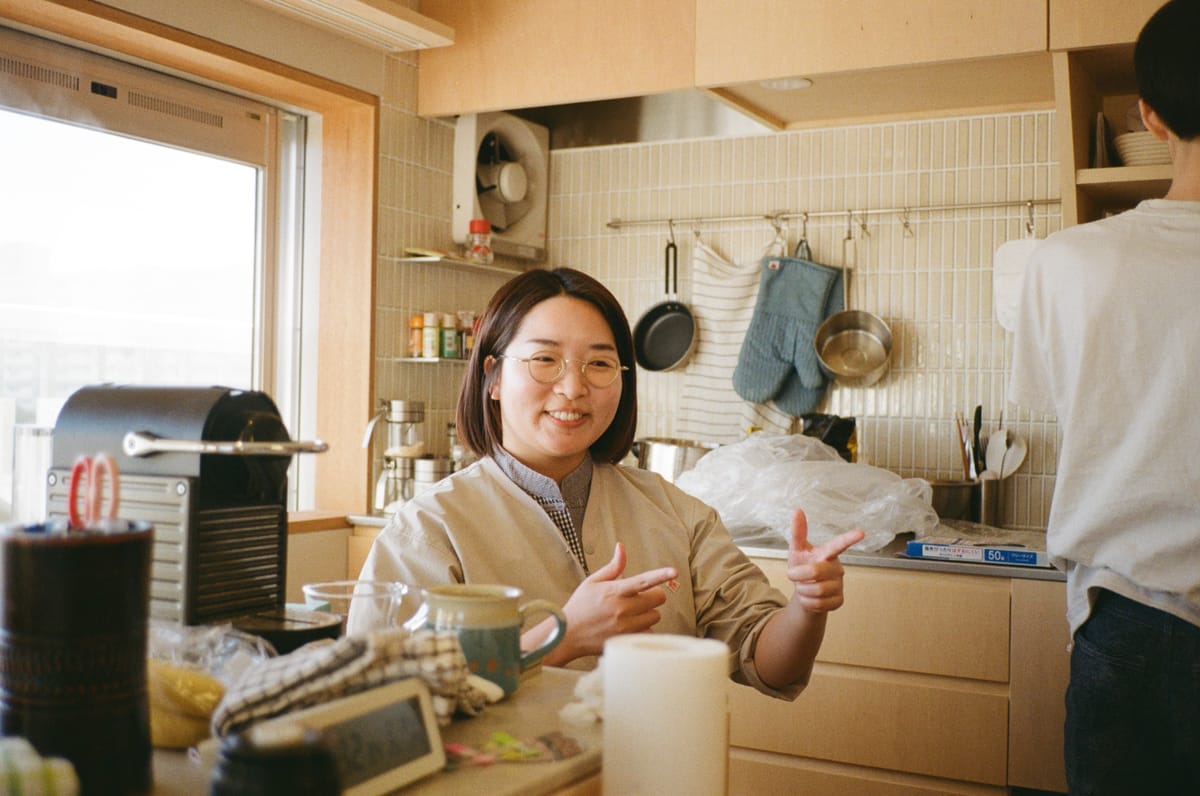
Danchi public housing complexes once symbolized Japan’s post-war shift from traditional multi-generational homes towards modern nuclear families. Today, they face an aging population and a negative image. The indie game creators of Danchi Days reimagine danchi from decaying places with “old farts and cats” to loose-knit hubs where elders and child-free couples can form communities of care. I spoke to Sandy, co-director and writer of the cozy indie game Danchi Days, about her vision of rebuilding relationships with neighbours that could allow people to live peacefully with dementia.
For me, this conversation began with a jar of homemade umeshu I brought to a gathering which was hosted by Melos—Danchi Days’ developer, composer, producer—in his renovated danchi apartment. As I poured the sticky plum liqueur for other guests, we naturally started talking about our various fermentation projects and homemade creations.
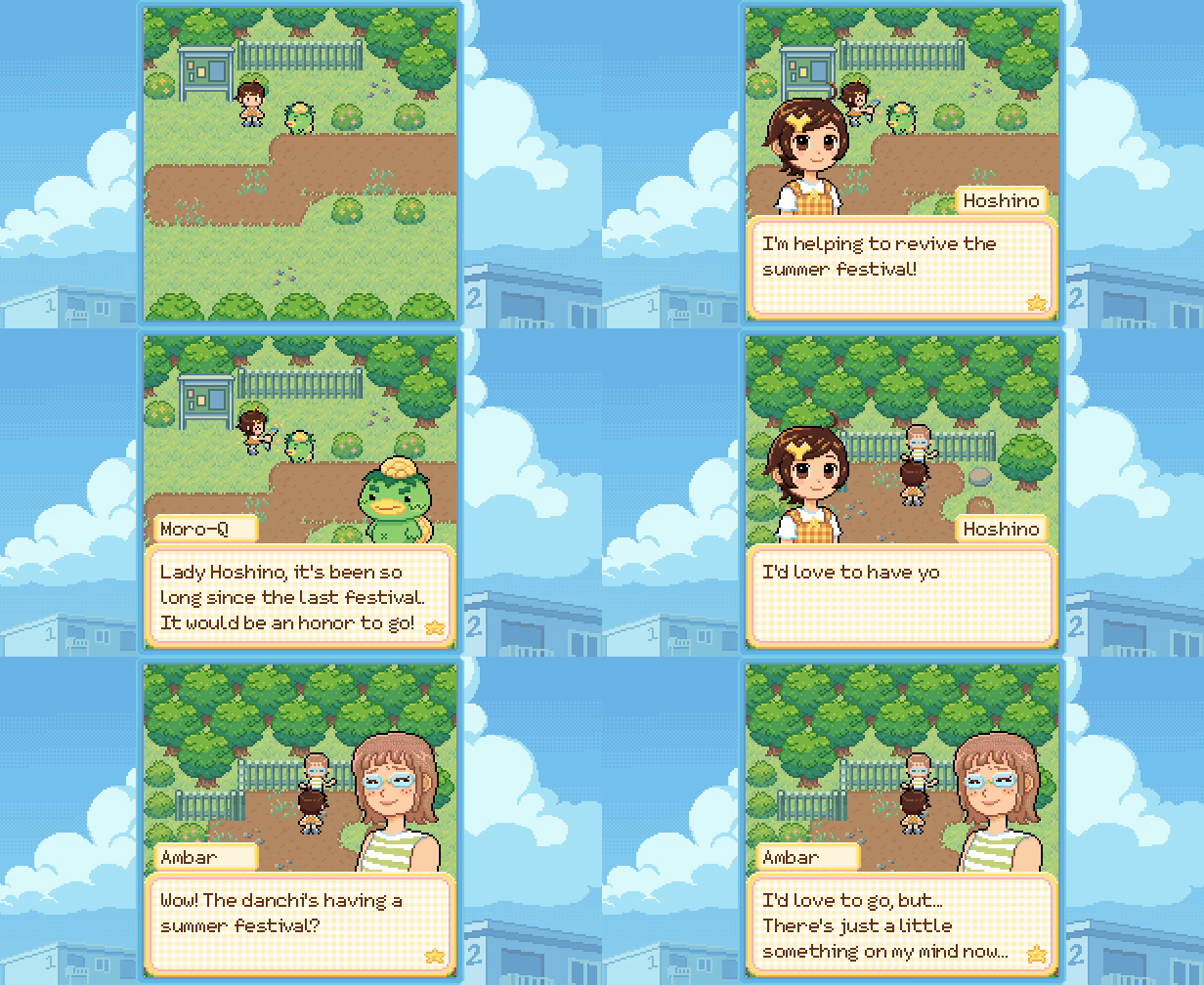
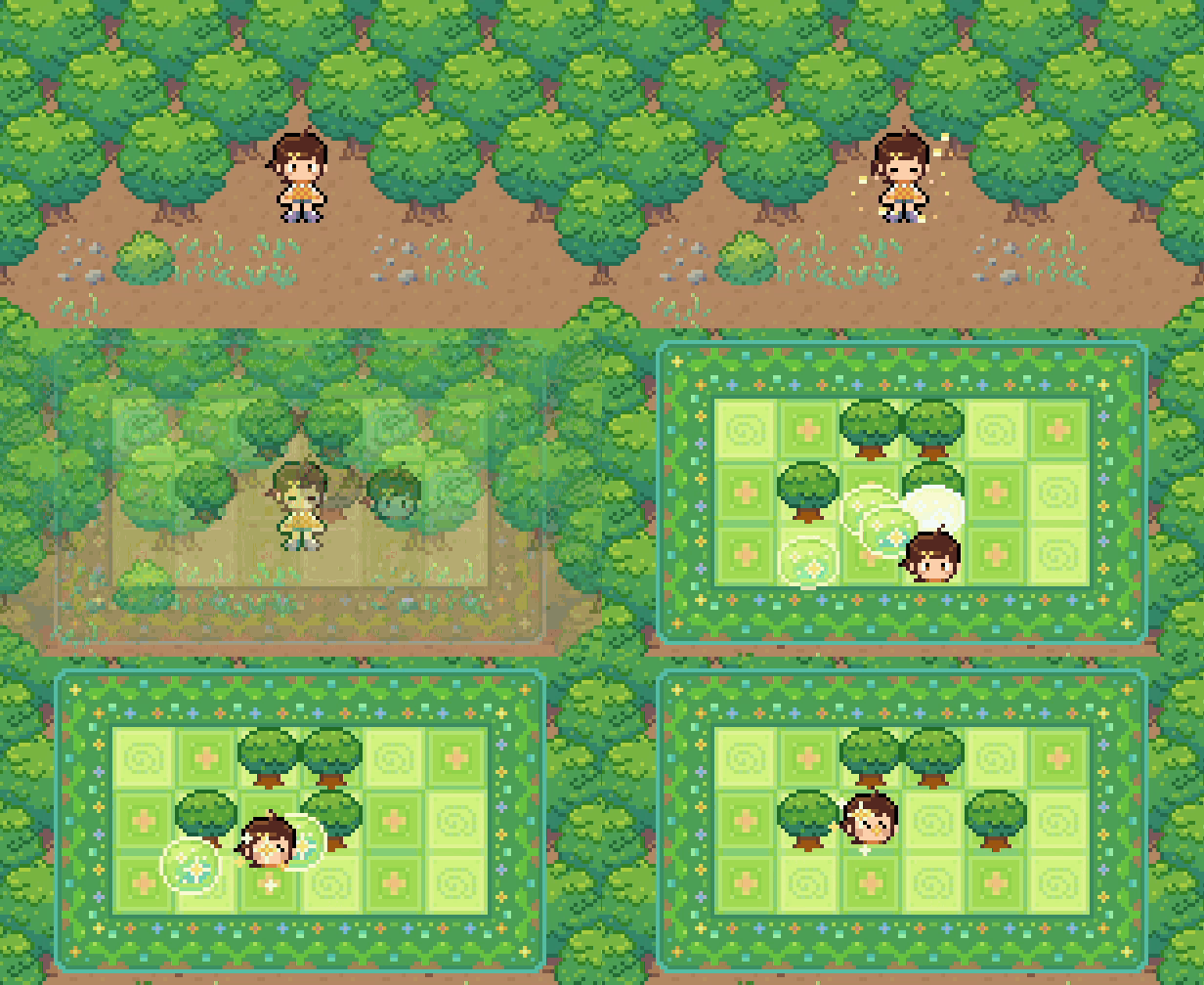
I expressed relief that people seemed excited to try my umeshu, because I sometimes receive mixed reactions when sharing homemade hoshigaki dried persimmons with friends in Tokyo. While many are delighted, others seem hesitant—perhaps they perceive it as grandma-like or questionably sanitary. We got talking about gifting practices and how it differs in Tokyo and Gifu. That’s when Melos mentioned that exchanging food features in Danchi Days, which follows a young girl's quest to revive her neighborhood's summer festival. This planted a seed of curiosity.
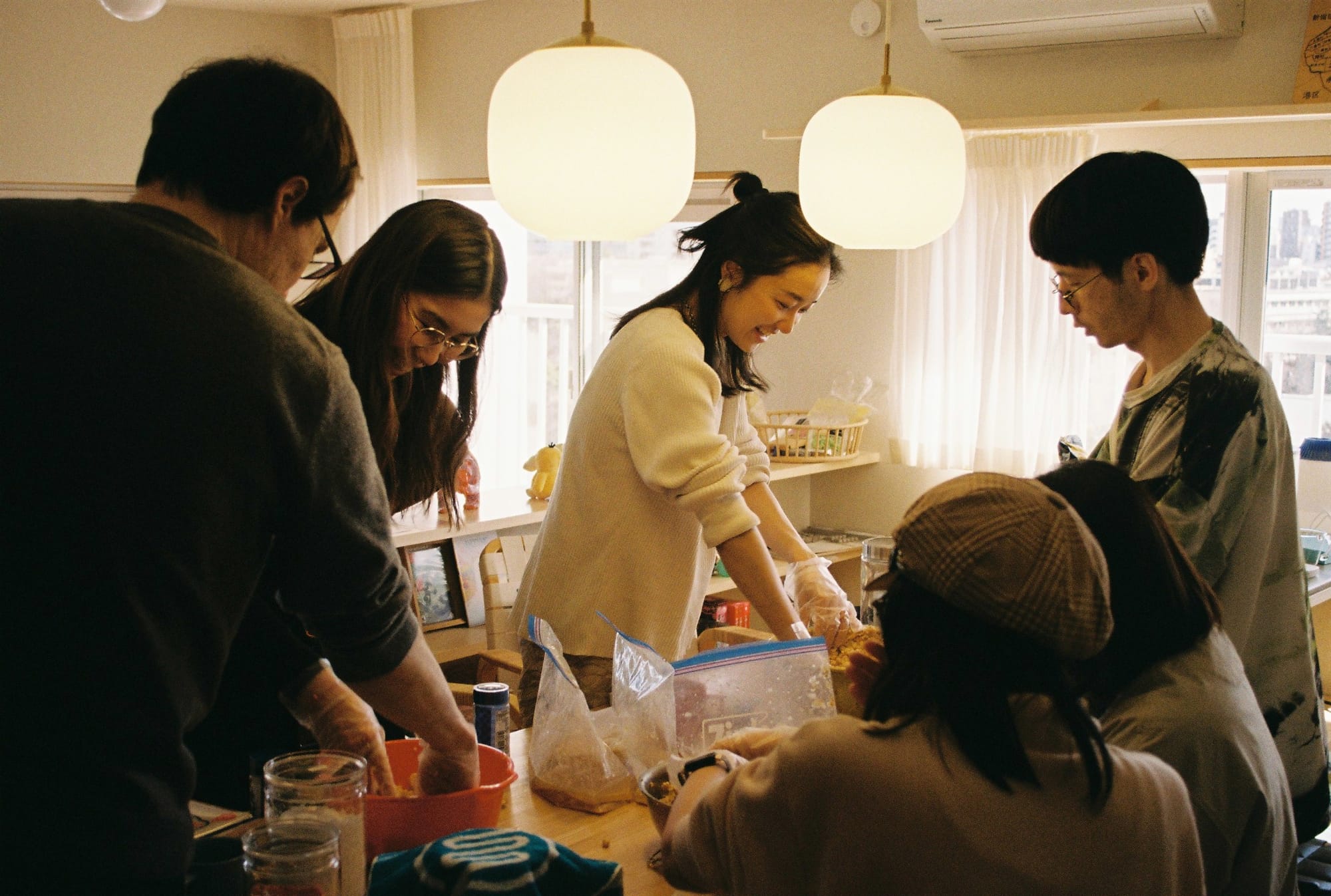
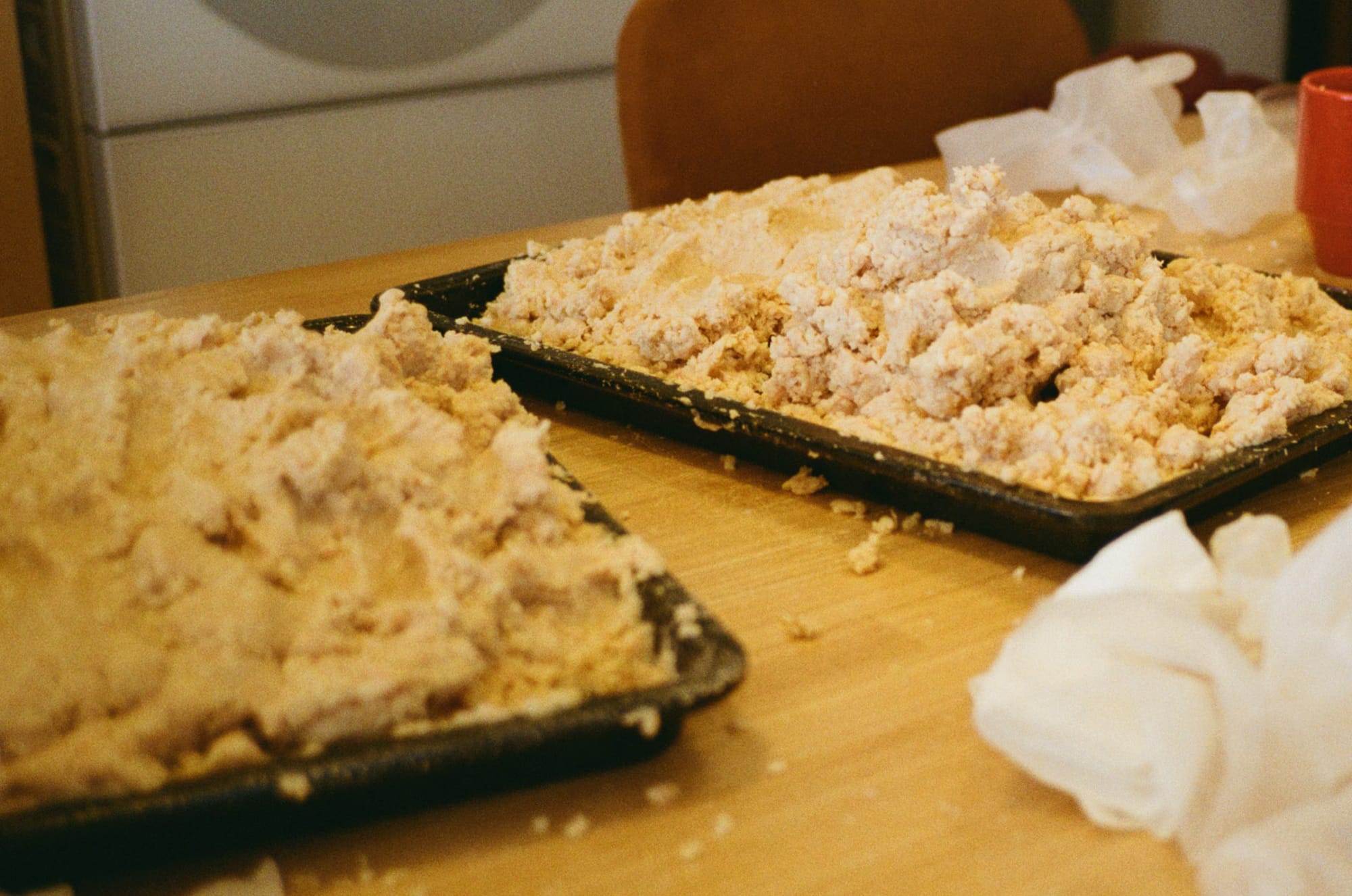
A month later, we gathered again at Melos’ apartment, this time for a miso-making workshop that my friend Julia organised. There, I met Sandy, who works on Danchi Days’ narrative and characters. She mentioned working on 151 distinct characters that players can invite to the festival—including one who needs help procuring miso. Intrigued, I asked her for this interview.
We never ended up discussing these characters. What began as a light-hearted curiosity about character design evolved into a conversation about the erosion of neighbourhood ties, Sandy’s personal connection to the game’s story, and her vision for creating a society where people can live peacefully with dementia. Within this charming and playful game, I found a heartwarming exploration of how we care for each other.
Interview with Sandy
Can you tell us what Danchi Days is about?
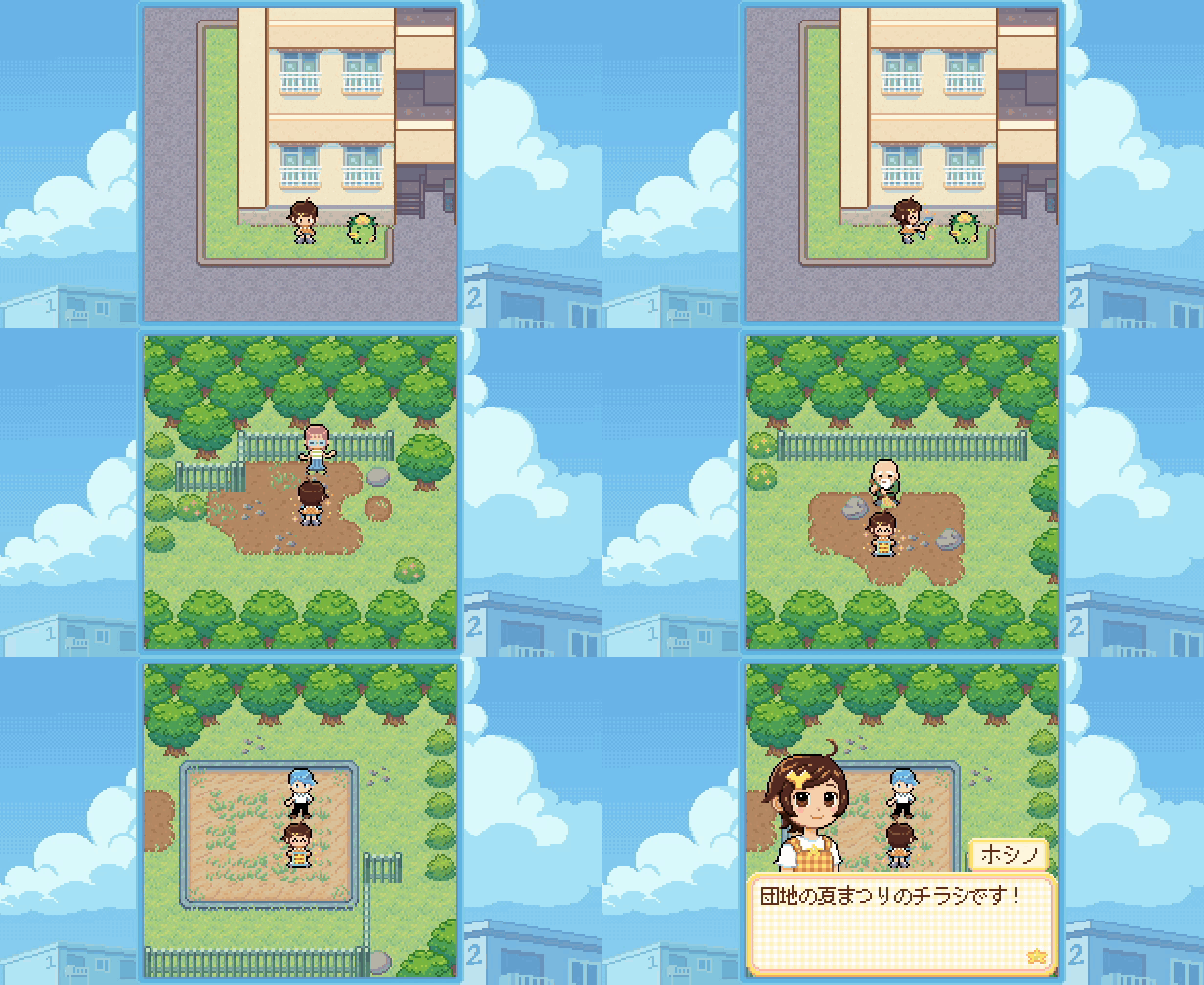
Our game Danchi Days is about a 12 year old girl called Hoshino Kanaoka who decides to revive the danchi (housing complex) summer festival that's been on hold for a few years because the residents have aged.
The part that’s not in the current demo—but is actually a really important part of the story—is that she wants to revive it for her grandma.
Why is it for her grandma?
Hoshino grew up with her grandma until first grade before moving to America for her father’s job for five years. When she returned to the danchi, her grandma wasn't the same person she remembered; in those five years, she had developed severe dementia and couldn't really talk anymore. But one day, Hoshino noticed that when she talked about the summer festival, her grandma became more alert. So she thought, "If I revive it, grandma might become more alive again."
Aw, that's so sweet. My grandparents are big figures in my life, so I always appreciate seeing relationships with grandparents depicted.
Does the protagonist's life resemble yours in any way?
Yes, we have the same transnational kikokushijo returnee background. I was born in Taiwan to Taiwanese parents, but lived in Japan from age three to seven for my father’s job. When we moved back to Taiwan, I attended Japanese school, so it's my strongest language. Later I transferred to an American school and went to college in the US. I ended up spending 10 years in the US before coming to Japan in 2019.
What about the topic of dementia?
Hoshino’s grandma's dementia is very personal for me. My grandmother passed away when I was in sixth grade and towards the end of her life, she was showing dementia symptoms. My dad is showing signs of dementia now, so I have this feeling that in the future, I am going to develop it too. Reading about dementia has made me scared to age because there is so much stigma; a lot of the discourse is about how to prevent it, and nobody wants to have it. But modern medicine hasn’t been able to find a cure, and that might not be possible during my lifetime. In that case, I want to create “安心して認知症になれる社会”—a society where one can live peacefully with dementia.
It seems like there are many levels to the game’s story. On the individual level, there’s the protagonist inviting neighbours, then on the family level, there's a story about dementia. You also go wider, to the community level. I'm not sure how they're connected, but can you speak to the community storyline? As a danchi resident, do you feel like there's a sense of neighbourliness?
They’re all definitely connected–I think Danchi neighbourhoods have the potential to become a dementia-friendly city. But the sad reality is that the Danchi that I live in isn’t very neighbourly. I only know the name of one person, who lives across from us. She was the first generation to move in and she’s so friendly. She's part of a dance choir in the Danchi. They sing together in one of our community centers every Saturday and have concerts.
I sense that our Danchi had stronger ties when it was built. There used to be a role called floor touban, where people on the same floor would take turns with certain responsibilities. A few weeks ago, I was supposedly the floor touban so I asked the kanrininsan (building manager) what it entailed, and he mentioned watering the plants on the floor. I was like, “Plants on the floor? Where are they?” They’d gotten rid of them. There’s nothing to do anymore. The floor toban has become an empty shell, and that goes to show there used to be a more tight-knit community.
Or that there used to be these roles or mechanisms to encourage people to take collective ownership of the space and interact with each other.
Exactly. I think one reason why neighbourliness has decreased is convenience, which has made us more self-reliant in a negative way. Before 24-7 convenience stores, when you were making your nikujaga at dinner time and you just needed that one cup of shoyu (soy sauce) but you ran out, there was nowhere to go, so you knocked on your neighbor's door.
While researching this topic, I found some discussions on Yahoo! Chiebukuro (an early internet Q&A platform similar to Reddit) where one woman was asking if it's rude to borrow miso from her neighbor. She wanted to, but her husband said, "そんな常識ないことやめなさい" (Don’t do such a socially unacceptable thing). So she asked, "私って常識ないのでしょうか?(Do I lack common sense?). The replies were shockingly mean. One comment said, "自分の味噌の量を管理できない能力の低い人に自分の味噌を与えたくない" (I don’t want to give my miso to someone so incapable they can’t even manage the amount of miso they have). Don't you think that language is totally neoliberalism? Neoliberalism has imbued us with this independent, self-reliant jikosekinin (personal responsibility) mindset.
I like how you point out the wider, systemic factors that contribute to decreasing neighbourhood ties, because a lot of the discourse on communities and the "loneliness epidemic" focuses on how we've become antisocial, which blames individuals. I'm obsessed with how neoliberal values—the emphasis on individual responsibility, and transactional treatment of relationships in particular—has infiltrated our thinking. We're discouraged from leaning on others. I'm not sure how I'd feel about someone asking me to borrow ingredients, but within bounds, small favours without expectation of return can strengthen bonds.
Speaking of community bonds, how have the changing demographics in danchi affected the social fabric?
My neighbour mentioned that she used to see other residents because everybody was raising a child. A lot of the families that originally moved into Danchi were young couples with small kids, so their kids would hang out together and create the kikkake (opportunity) for families to connect. But now residents vary in life stage, and there's not much in common that holds me and my neighbours together.
These days, my dad always asks, "When are you coming back to Taiwan?" Most people rely on their children for their aging future. It’s common, especially in Asian cultures, to expect them to take care of you, but I don't think that will be the case for everyone in the future, especially with more couples opting not to have kids or more people staying single.
Who are you going to rely on if you don’t have children? You might say you’d rely on friends, but not all friends live nearby. When you get old, how are you going to drive or take the train to go see them? I think the people who live close to you–your neighbors–are going to be the key players in making your life better as you age.
The danchi is the perfect setting for that because a lot of people live nearby. Unlike rural areas, community ties are loose enough not to feel claustrophobic, but not as loose as mansion (apartment buildings). Their shared spaces, like the hiroba (plaza) or playground are what make them unique, and that’s why I think danchi neighbourhoods can become a dementia-friendly city.
English trailer for Danchi Days
Where to Learn More
Danchi Days is scheduled for release in 2026. You can follow their development and updates at:
- Website: https://danchidays.com/
- Newsletter: https://danchidays.substack.com/
Meet the Team
- sandy powder: Co-Director, Writer, Design, Japanese & Mandarin Chinese Marketing
- mogumu: Artist, Marketing
- Melos Han-Tani: Co-Director, Design Lead, Music, English Localization, Code, Marketing, Producer